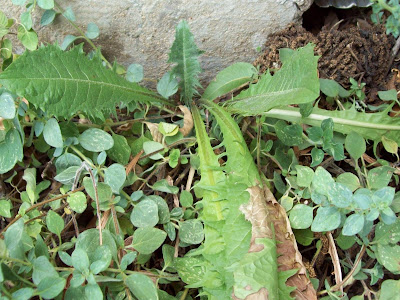
Seeing red? Most people look at a dandelion and cringe because they know that it's only the first.One dandelion can spread to a thousand in only a few days. I once thought that if I just picked the flower off that it would be done. One day I looked down at a flower I had plucked the previous day and poof, it was just that, a poof. Some of the seeds had even blown away.Next time you think red though you might want to think a little deeper, like Magenta! Dandelion makes a great magenta (allum) color or even purple (tin and vinegar) depending on the chemical you use to set the dye.
How to dye wool using dandelions:
1) In a stainless steel pot soak dandelion roots or plants overnight in water. In the morning bring the pot to a boil then remove the plants with a wooden spoon.
2) Wash the material you wish to dye in warm soapy water and keep it wet. The dye bath is your key to color.
3) Put a mordant (allum or tin and vinegar) in the pot with one cup of water: one ounce of mordant for every thirty-two ounces of material.
4) Simmer gently and stir until dissolved, add 2 quarts water, and stir well to mix. Your saturated textile goes into this bath; bring to a low simmer for 1 hour. Stir occasionally.
5) Note: When dyeing, ensure the fabric stays completely covered with water, and remember, materials appear darker wet than dry.
6) After the dyebath starts to simmer, check in 15 minutes if you wish to have a pale color. Leave the material in the dyebath longer for a deeper or richer color. For full color saturation, leave overnight in the dyebath.
7) Turn off the heat, let cool, squeeze out excess water, and then rinse in warm water to remove the alum.


